Vendor Compliance Disputes Tool: Supplier chargeback workflow for time-limited dispute resolution
UX Designer
Guiding suppliers through time-sensitive chargeback disputes.
Home Depot's vendor compliance program assessed automatic chargebacks for shortages, routing violations, pricing discrepancies, and labeling errors. The deadlines were strict and non-negotiable.
I partnered with the Supply Chain team to map the dispute process, identify where suppliers lost time, and design a workflow that made each required decision and document visible before the window closed.
The dispute window doesn't wait. The system had to make every step clear, fast, and documented — because a missed deadline isn't a UX failure, it's a financial one.
A step-by-step dispute flow that matched the supplier's decision sequence.
From violation review through evidence submission, dispute reasoning, document upload, and activity tracking — each screen designed around one decision moment.
Shortages, pricing discrepancies, and routing violations — each with distinct documentation requirements and rejection criteria.
Home Depot only processes disputes above $25. Surfaced clearly to avoid wasted effort on auto-rejected submissions.
Submissions past the dispute window are not reviewed — the deduction stands. Time-awareness was a core design requirement, not a feature.
Financial penalties that are automatic, strict, and time-limited.
Home Depot's Supplier Expectation Rating program automatically assesses chargebacks for compliance failures — fill rate misses, unauthorized carriers, labeling errors, missing EDI ASNs. These aren't negotiated penalties. They're system-generated deductions with published rules and fixed dispute windows.
A shortage dispute without a signed Proof of Delivery is rejected regardless of its validity. A dispute filed past the window isn't reviewed at all. For high-volume suppliers, uncontested chargebacks accumulate into significant quarterly revenue loss. The design had to make the right action the easiest action — at every step.
The workflow guided suppliers through the decision sequence they had to complete before the window closed.
Suppliers needed to answer a practical sequence: What happened? Why was I charged? What proof do I have? What do I need to submit before the deadline? The workflow followed that sequence exactly — inbox → violation detail → summary → dispute reason → document upload → comments → activity log. One decision at a time, required documentation surfaced at the moment it was needed.
Inbox as triage
Violations surfaced in deadline order — most urgent first. Threshold check visible before entering the submission flow.
Structured dispute reasons
Categorized selections aligned with Home Depot's review criteria — reducing rejection risk from reasoning mismatches.
Documents at point of requirement
Upload embedded in the flow where each document was needed, not deferred to a separate step.
Full audit trail
Every action timestamped. Suppliers could track resolution without contacting Home Depot directly.
Nine screens mapped to one complete dispute decision flow.
Inbox & Violation Detail
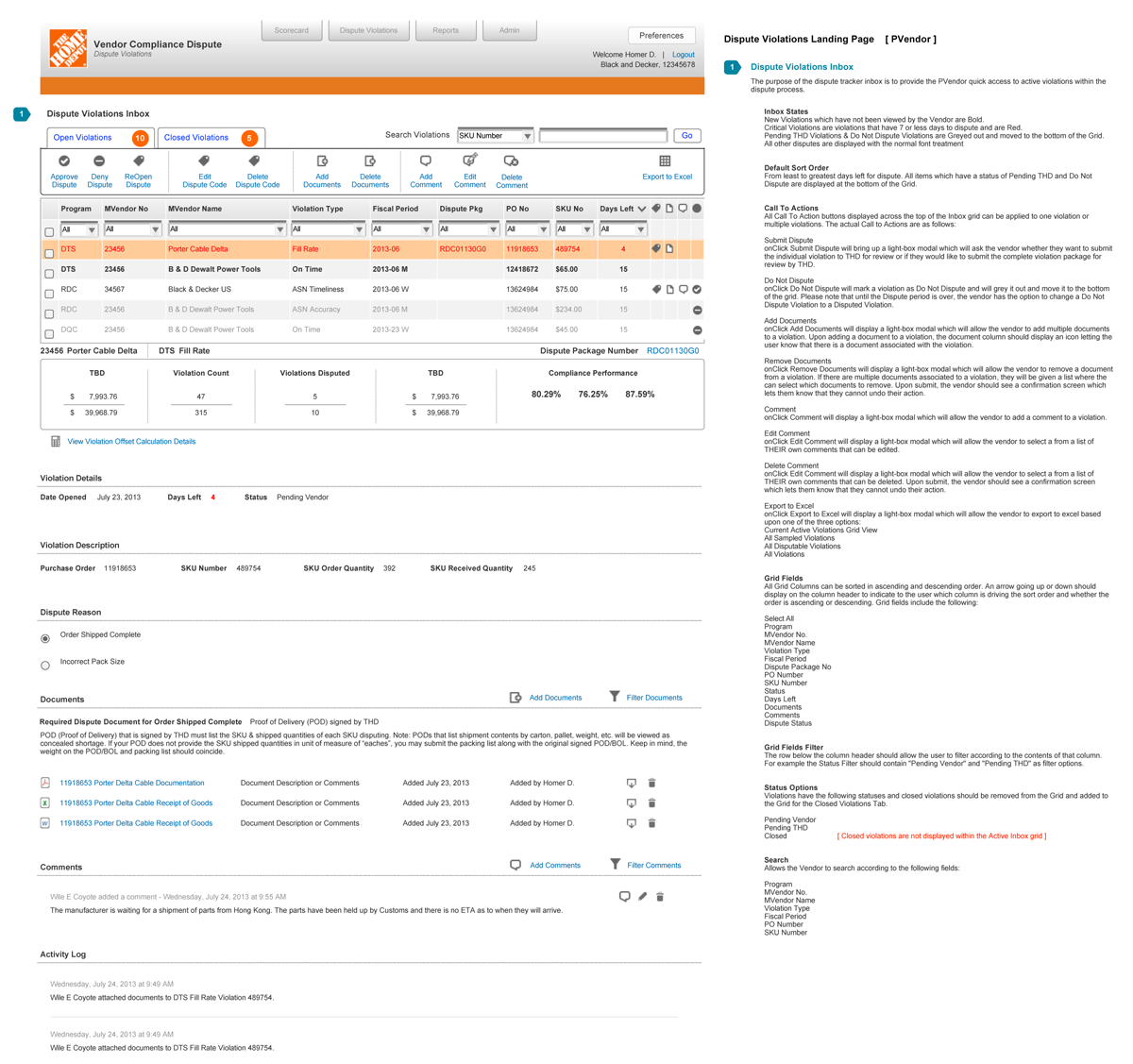
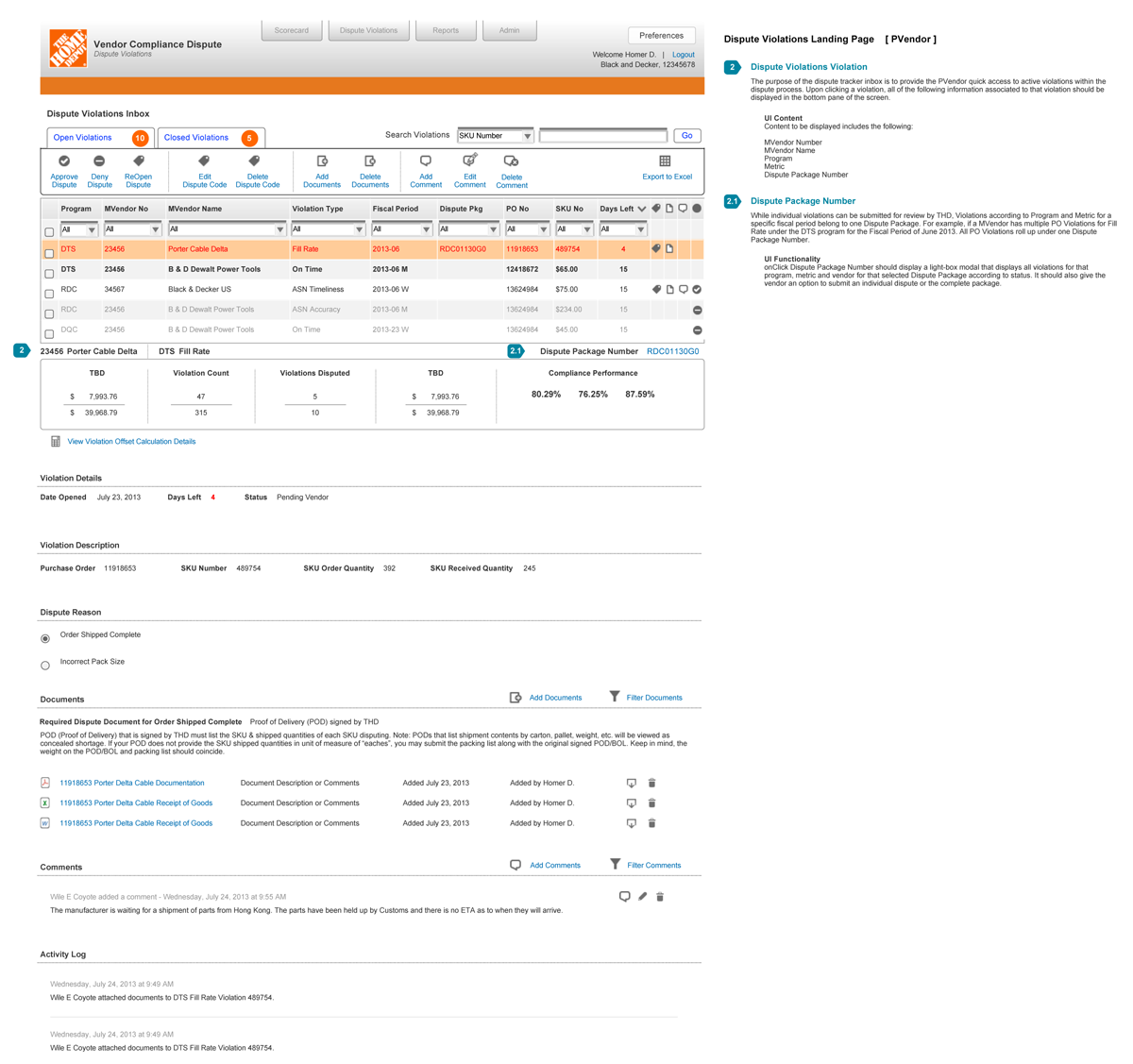
Inbox sorted by deadline urgency. Violation detail showed type, amount, required documentation, and threshold check before suppliers committed to the dispute flow.
Dispute Reason & Document Upload
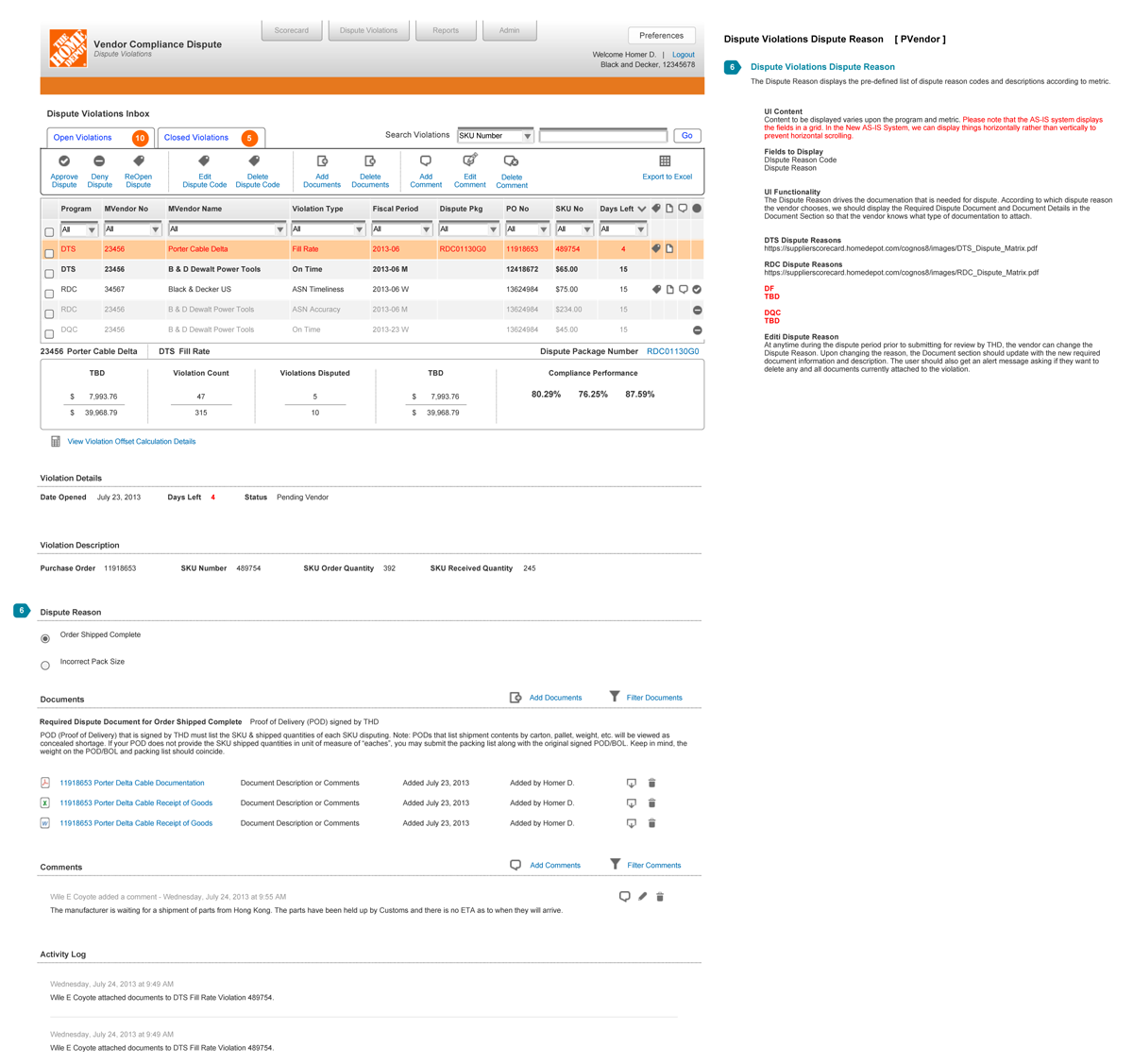
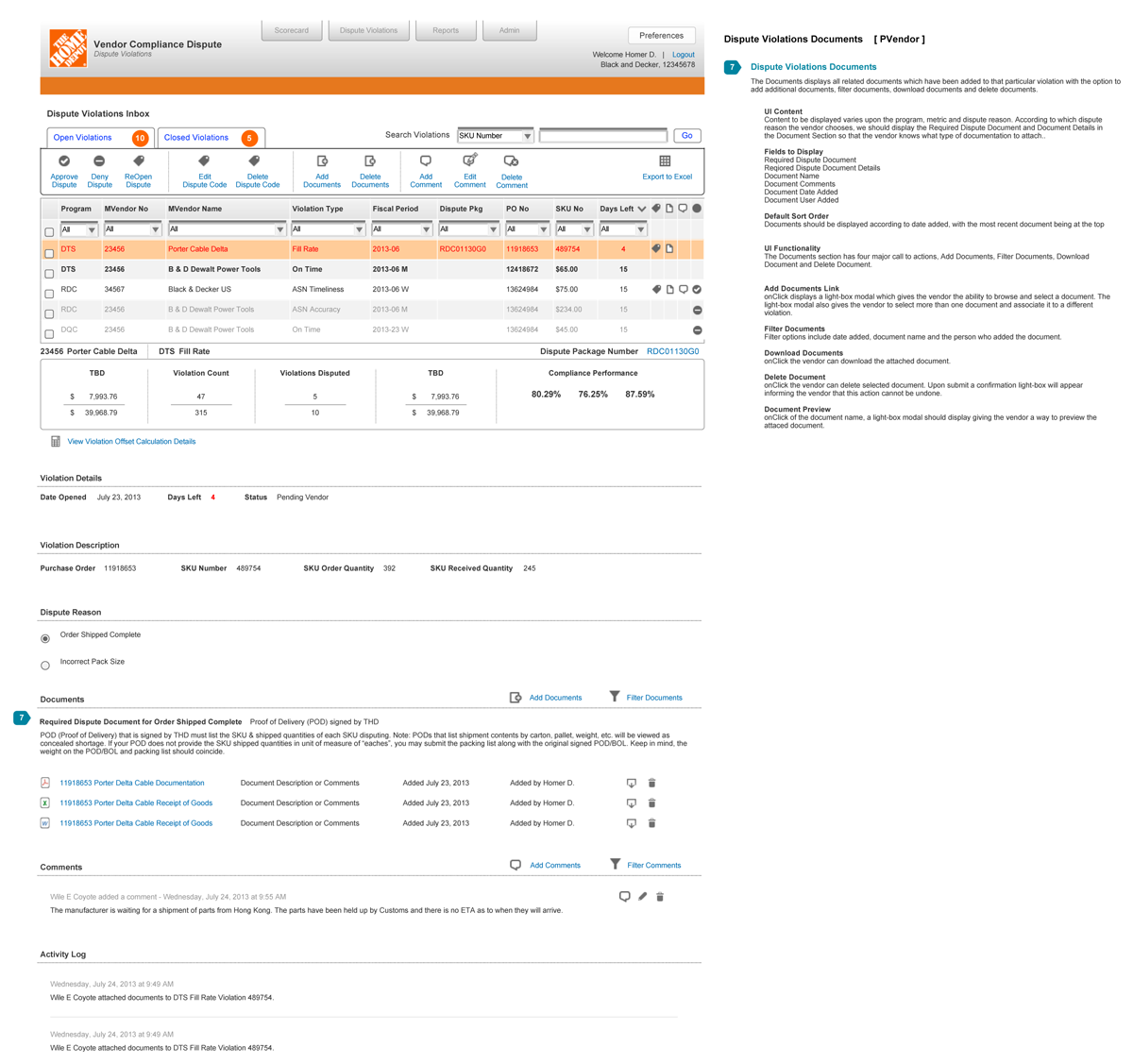
Dispute reasons as structured categories matched to Home Depot's review criteria. Document upload with required/uploaded status tracked — submission blocked until complete.
Activity Log
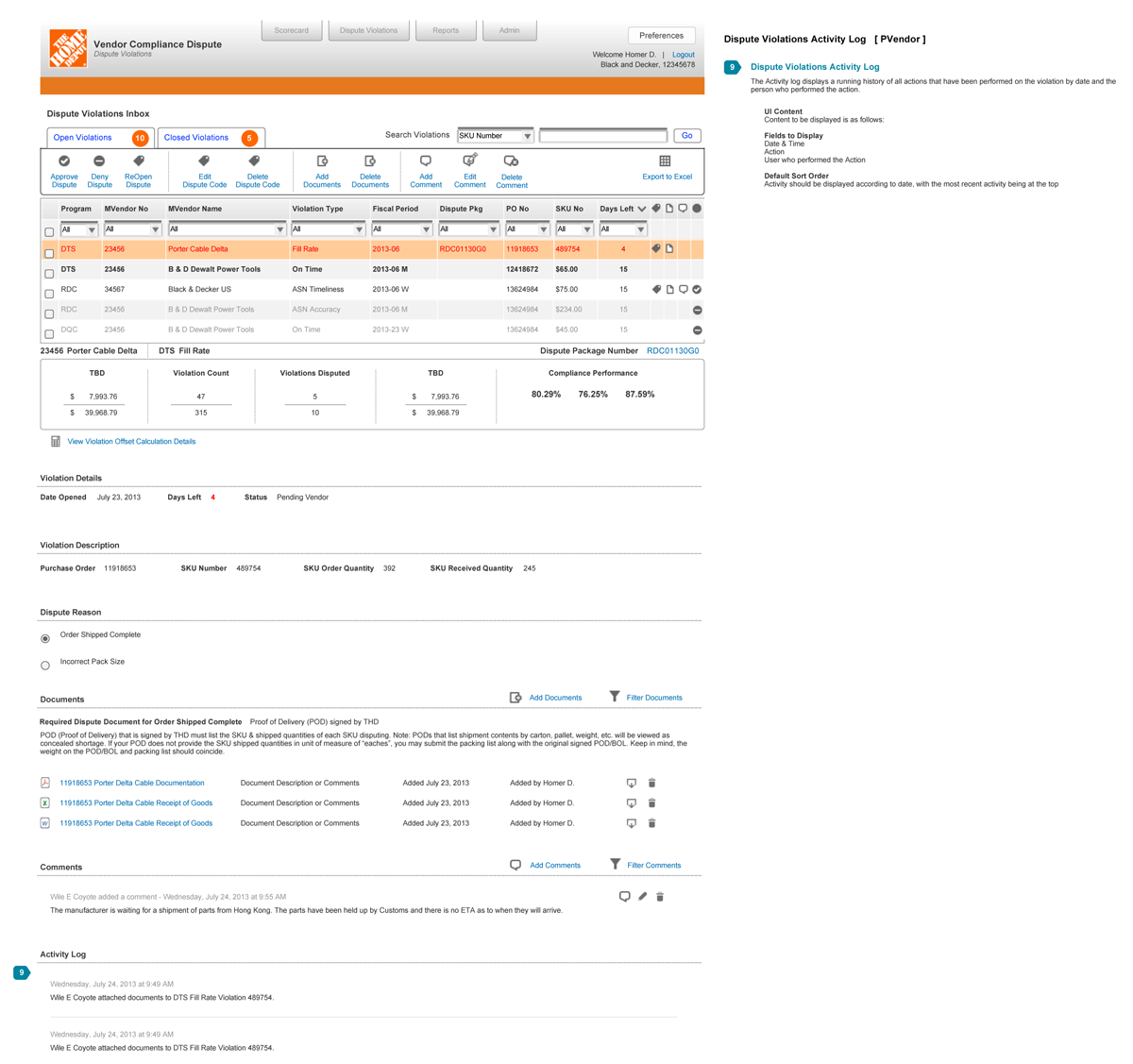
Every action timestamped — submission, status change, document upload, AP team response. Suppliers could track resolution without contacting Home Depot directly.
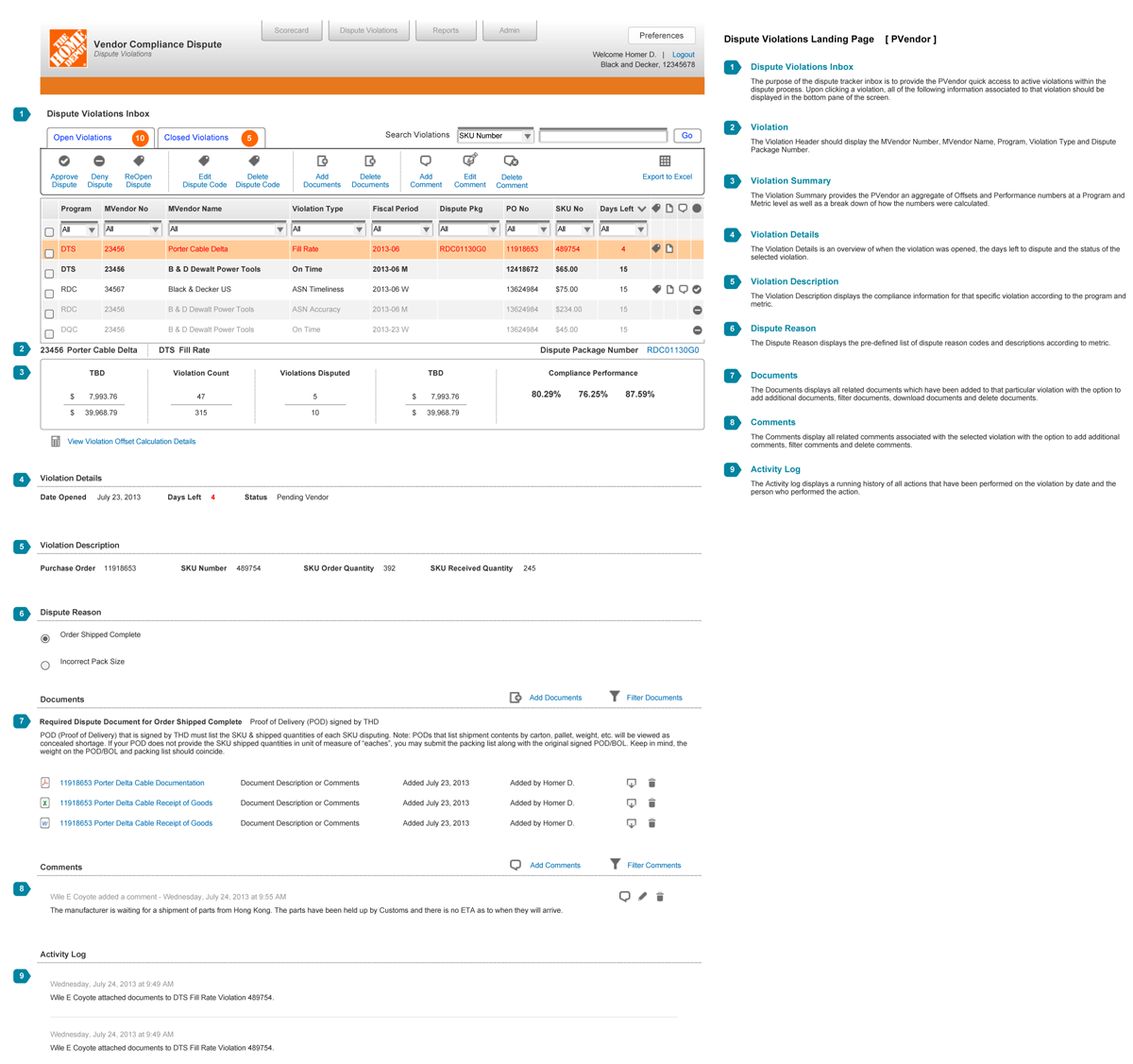
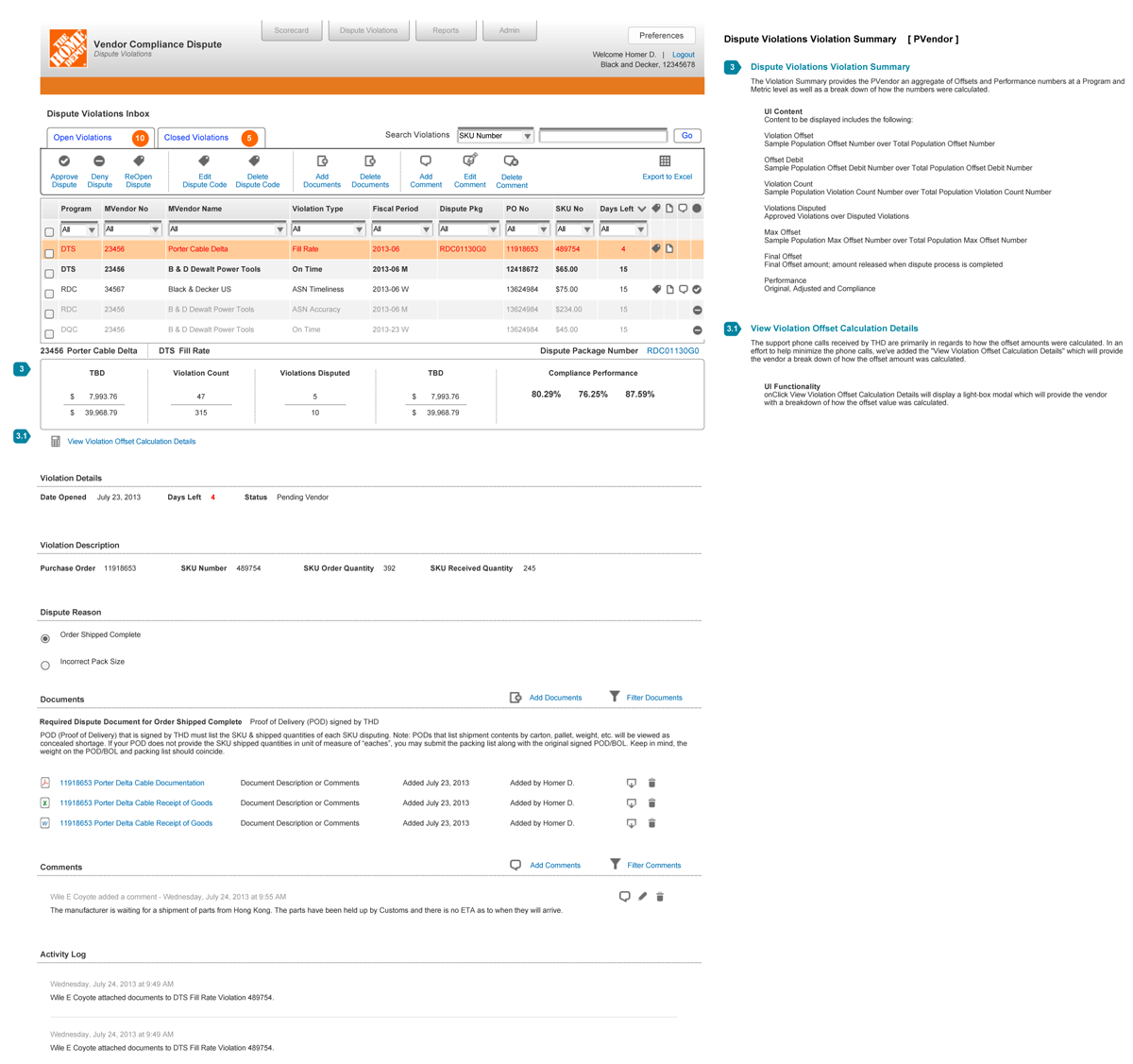
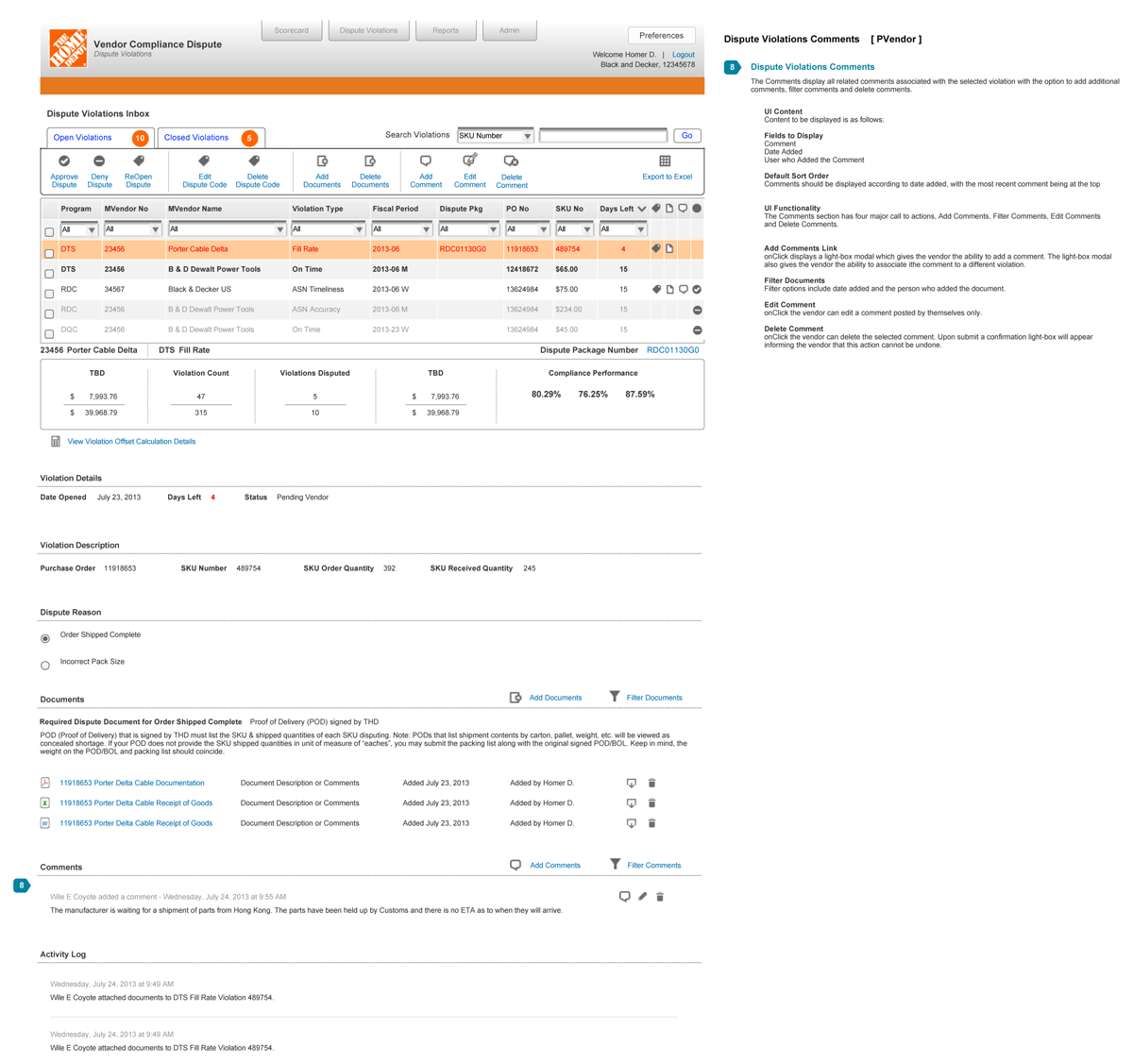
Supporting artifacts
Additional screens covered violation summary, description, and the comments thread.
What This Shaped
The workflow aligned suppliers and reviewers around the same evidence, deadlines, dispute reasons, and audit trail. At Home Depot's supplier scale, even small improvements in dispute submission quality — more complete documentation, fewer missed windows — represent meaningful financial recovery across the vendor base.