UX Research & Design Strategy Lead
Organizing support around the language customers already used.
Customers had clearer paths to answers when support content was structured around the words they used, not internal categories. As research lead and design strategist, I led discovery, taxonomy redesign, and content strategy for AT&T's primary consumer support destination — improving CSAT by 20%, reducing support calls by 5–12%, and increasing monthly visitors by 5M.
Less calling. More solving.
Measurable improvement across every metric that matters for self-service — satisfaction, call deflection, traffic, and time-to-answer.
ForeSee CSAT improvement post-launch.
Fewer inbound support calls as customers resolved issues online.
Increase in unique monthly visitors following launch.
Reduced dwell on upper-level pages — customers finding answers faster.
Customers had clearer paths to answers when support was organized around their language.
AT&T's support content was organized around internal categories. Customers arrived with problems in their own words — "reset my password," "fix my bill," "why is my service not working?" The redesign started by mapping customer vocabulary to the business structure, not the other way around.
The content existed. The opportunity was making it findable.
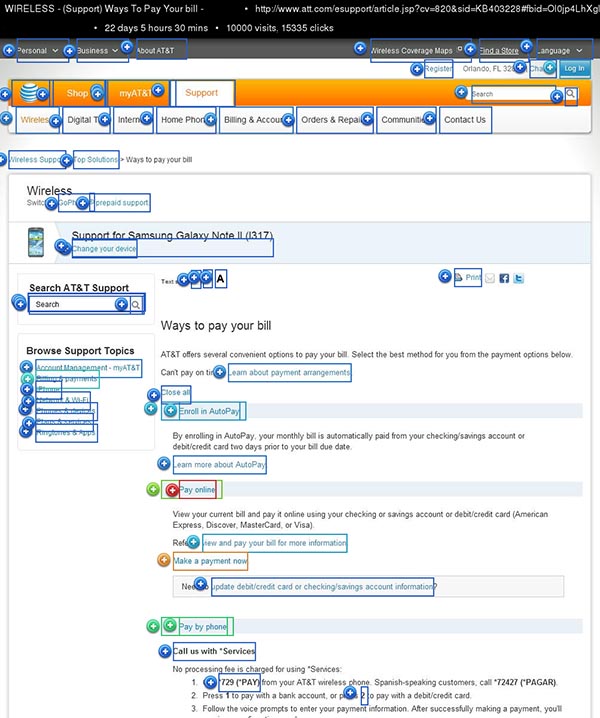
Click analysis — the gap between where customers navigated and where AT&T expected them to go. The misalignment was structural, not random.
From internal categories to customer-language taxonomy.
Four methods. Every one pointed to the same root cause.
Taxonomy first. Pages second.
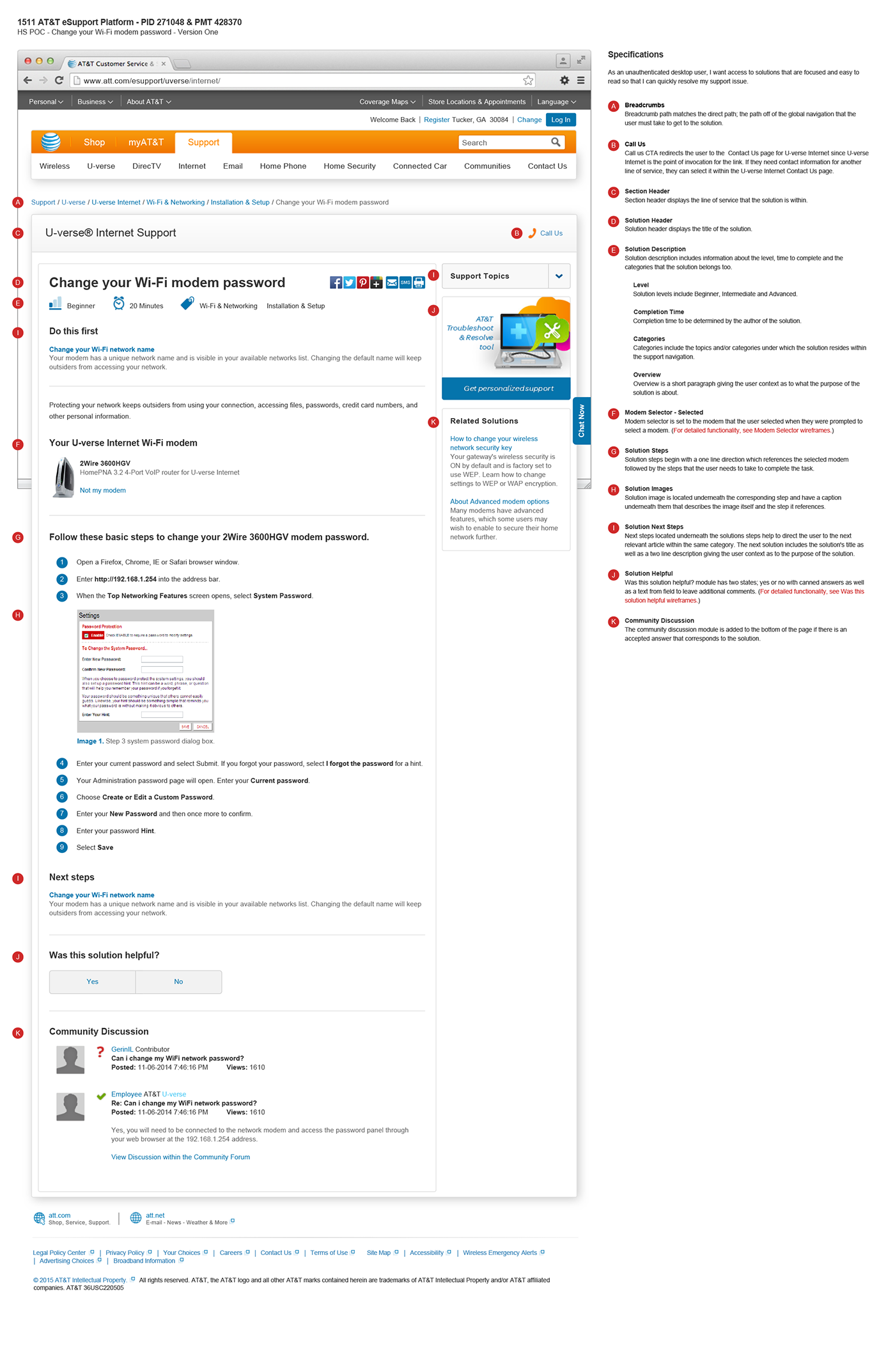
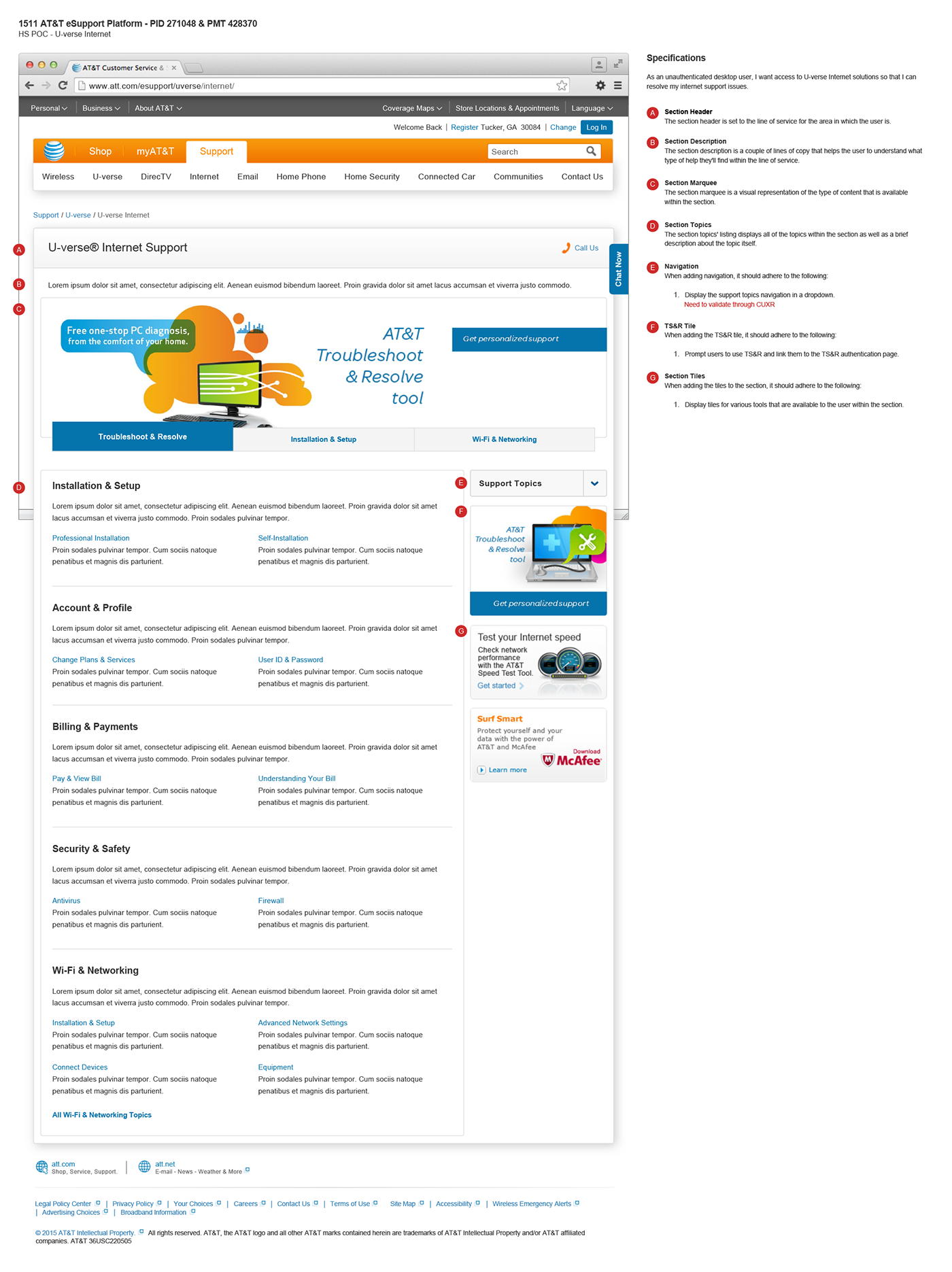
We didn't start by polishing page templates. We rebuilt the taxonomy around the words customers used, then redesigned support pages around scanning, task priority, and clear paths to answers.
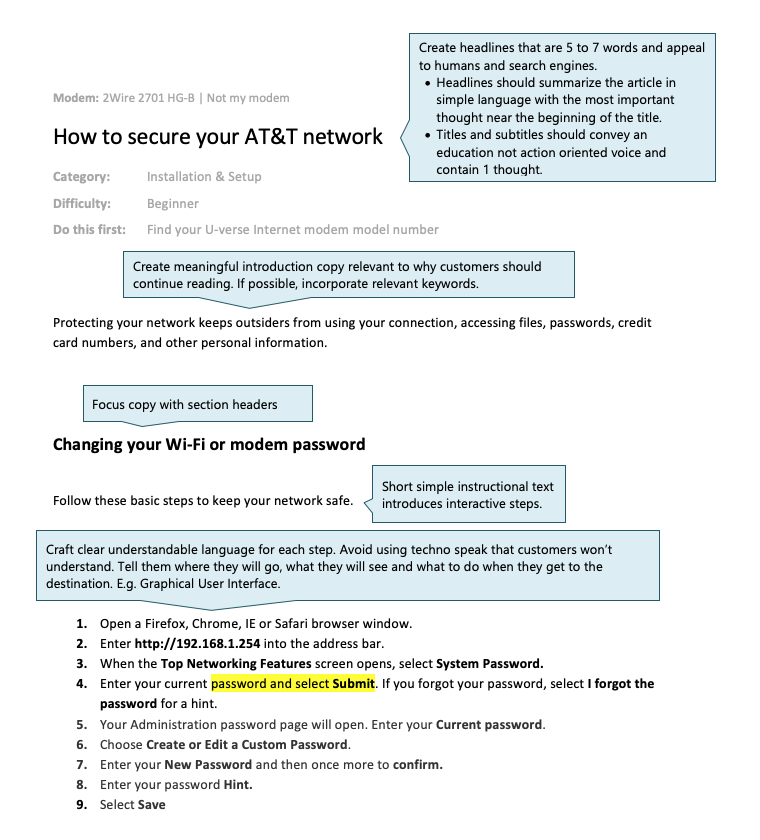
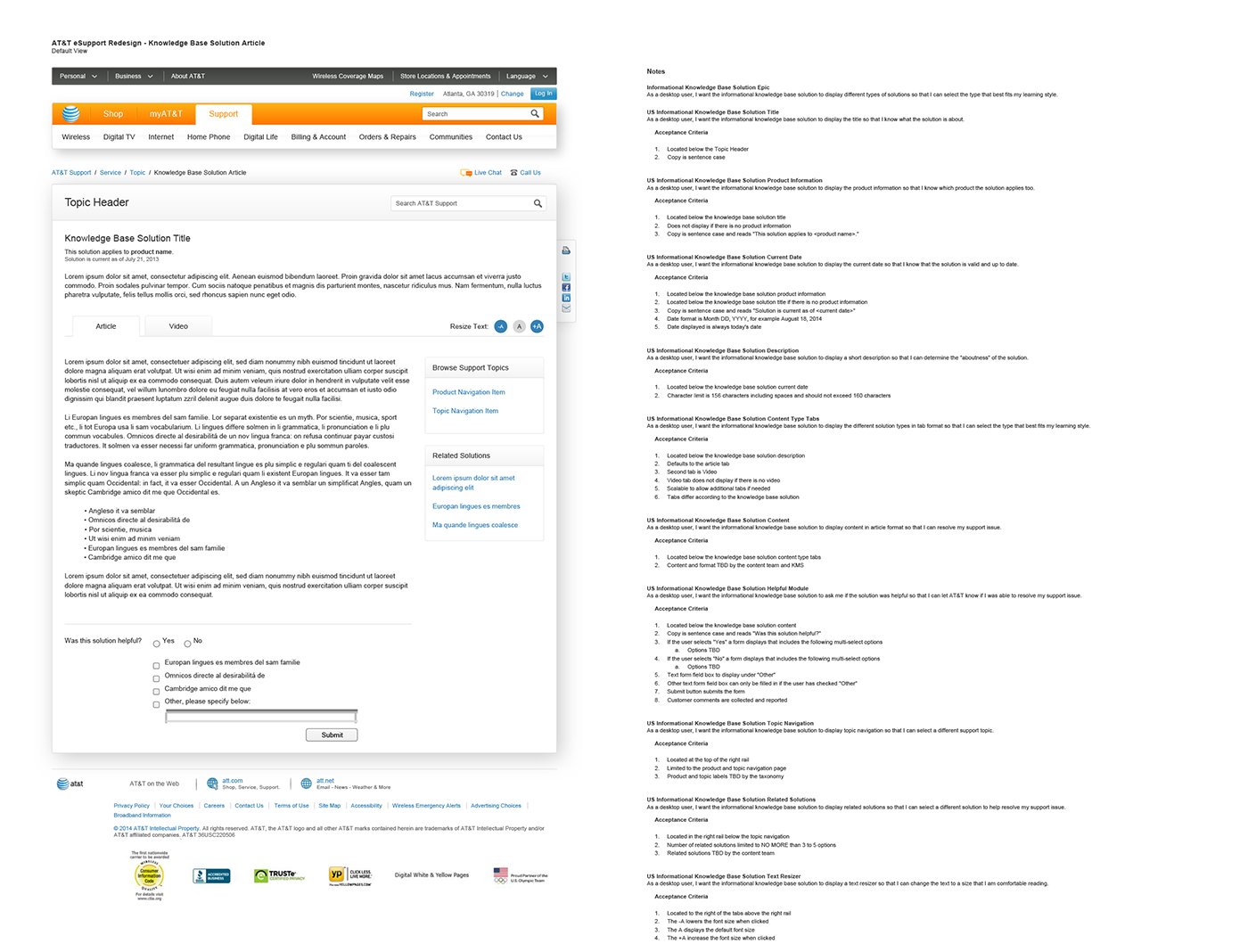
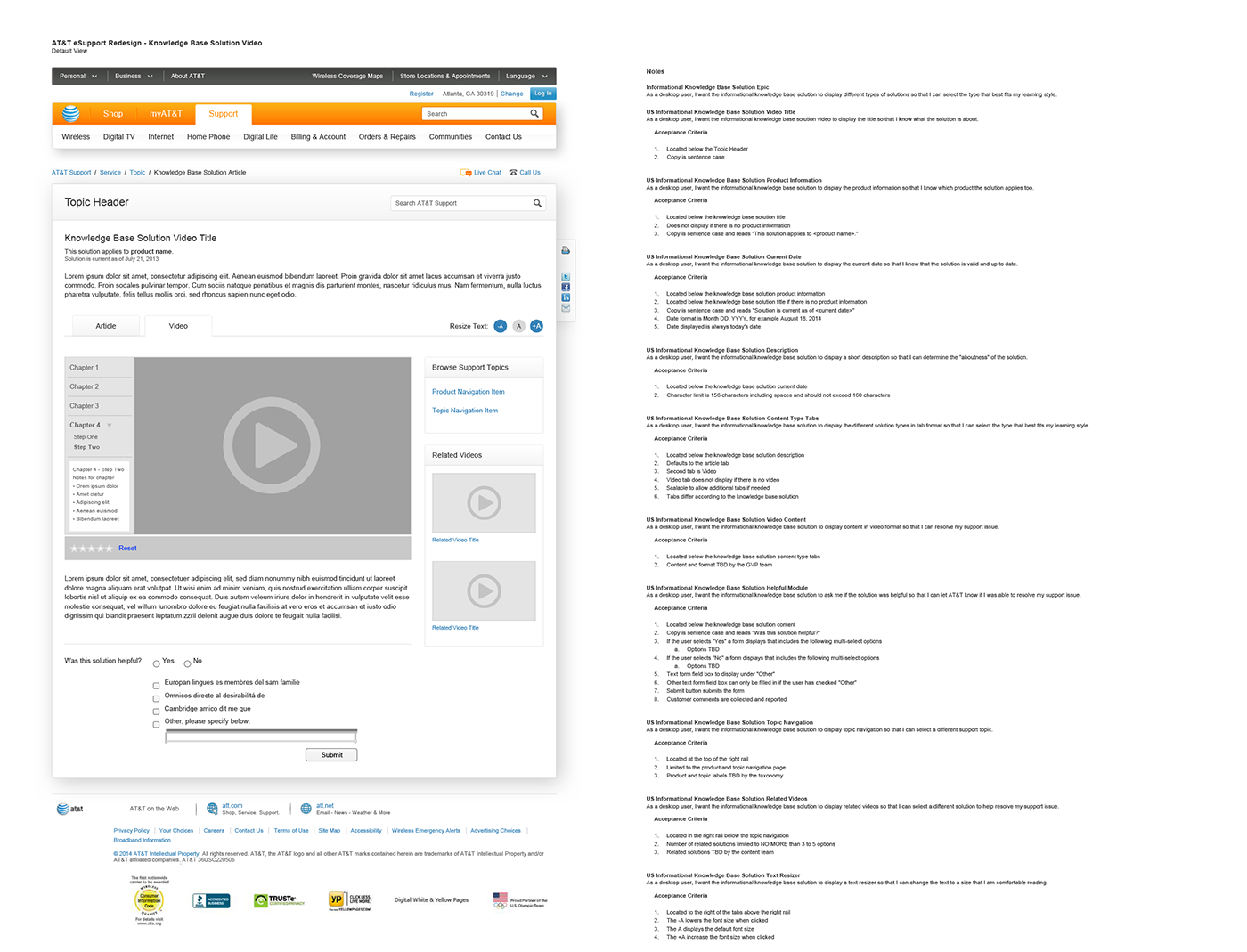
Content structure — reformatted for scanning with clear hierarchy, short paragraphs, and the terms customers actually use when searching.
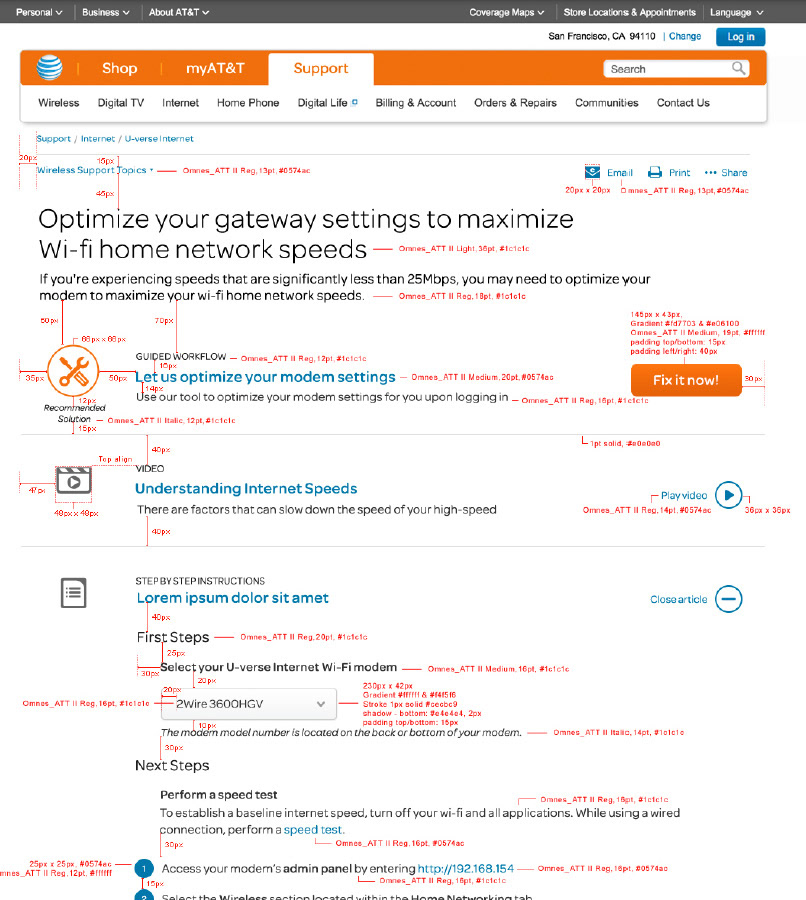
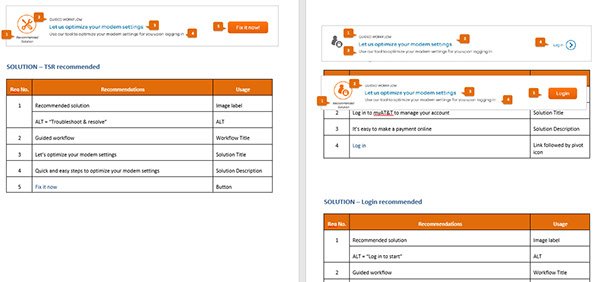
Final comps and redlines — handed to engineering with complete specifications for the redesigned experience.
Design artifacts
Task success nearly doubled. Twice.
We tested iteratively — labels, page structure, CTA visibility, scroll behavior, and task completion — before each build cycle.
| Test Round | Before | After | Gain |
|---|---|---|---|
| Round 1 — Taxonomy labels | 36% | 46% | +10 points |
| Round 2 — Page structure | 29% | 56% | +27 points |
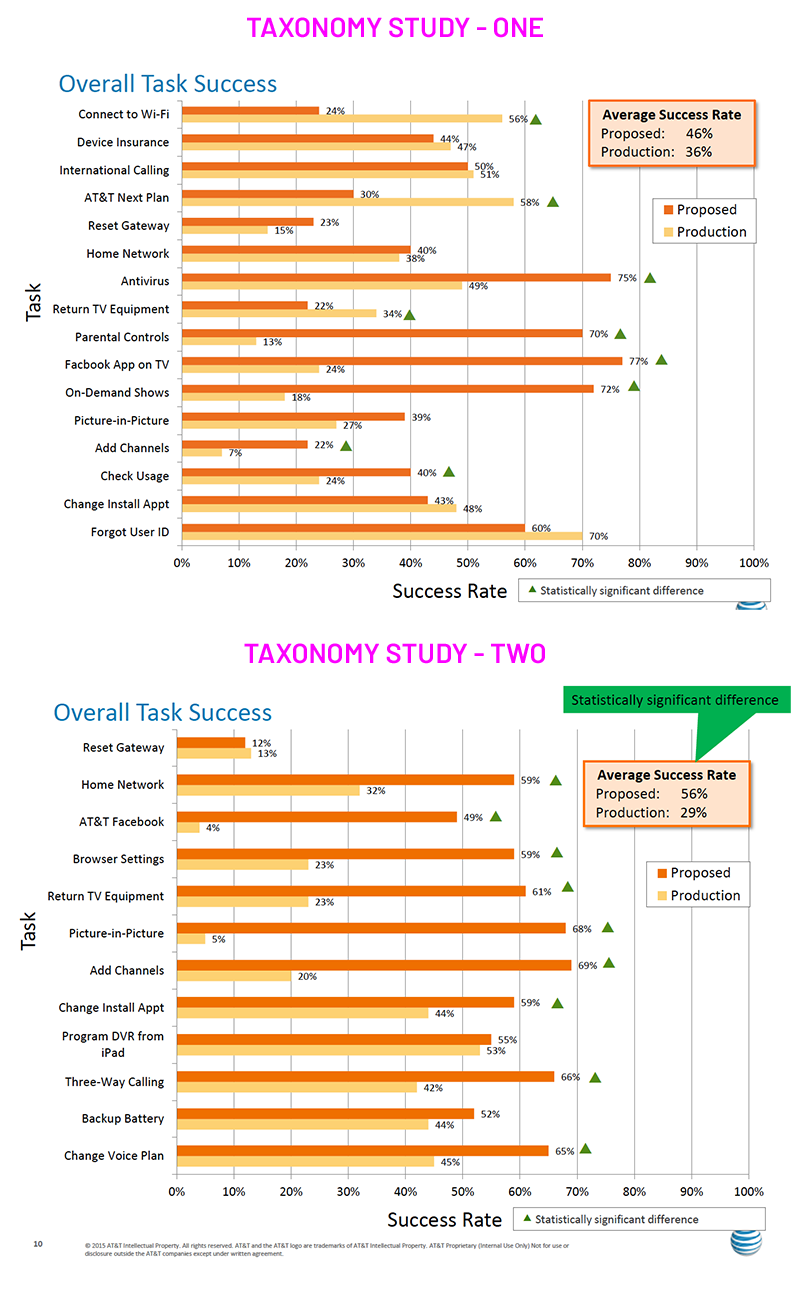
Taxonomy validation — confirming new category labels matched how customers actually searched, before committing to full content migration.
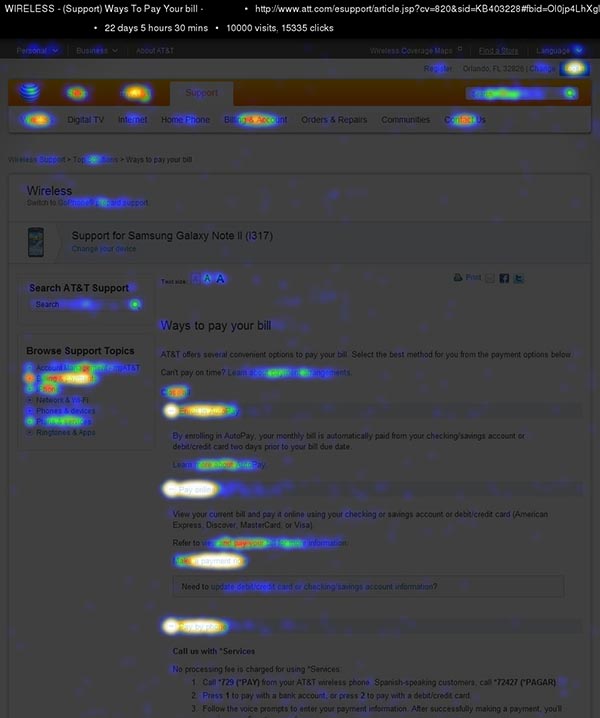
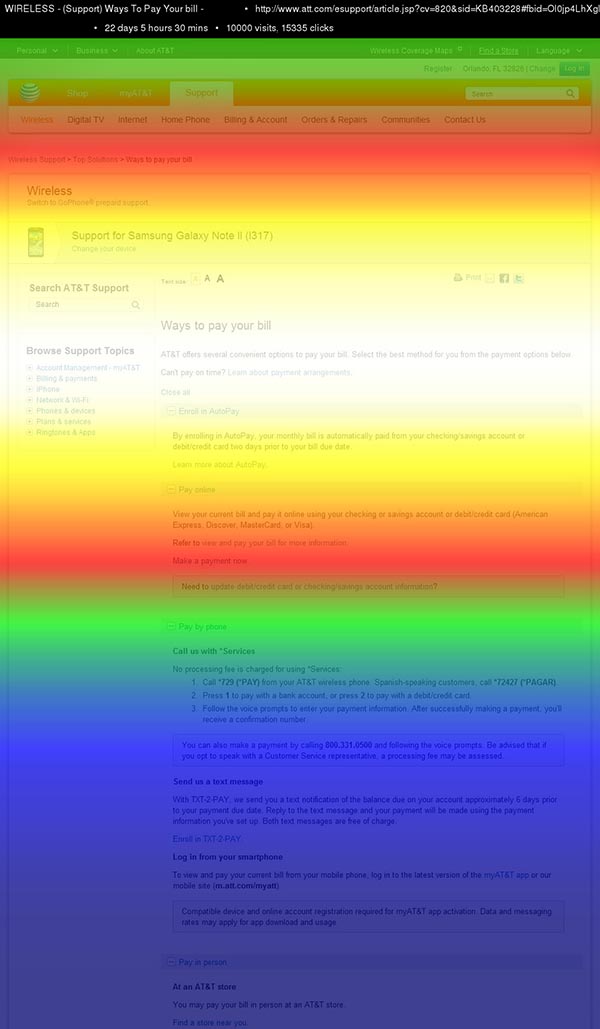
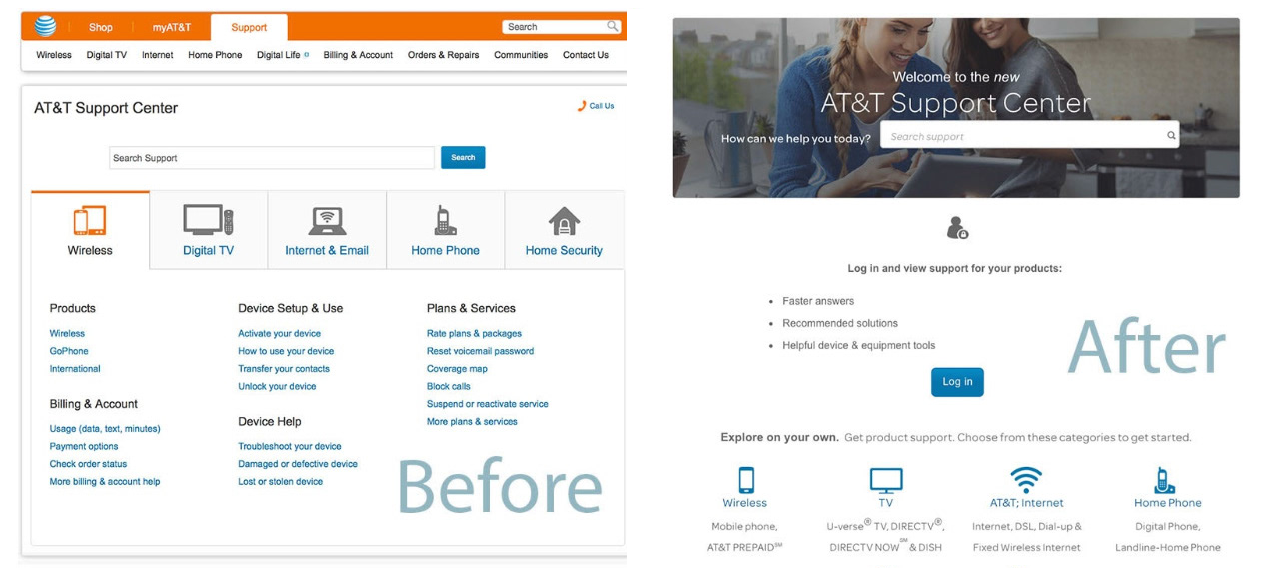
Before & after — the redesigned AT&T support experience.
What This Changed
Rebuilding support around customer language made answers easier to find at scale. Customers found clearer paths to common tasks, support pages became easier to scan, and the experience reduced pressure on assisted support channels.